
The Freezer-Stash Breakfast Muffin That's Doing More For Your Iron Than Your Multivitamin
If your weekday mornings currently look like coffee, chaos, and whatever you can eat one-handed on the way out the door, this one's for you.
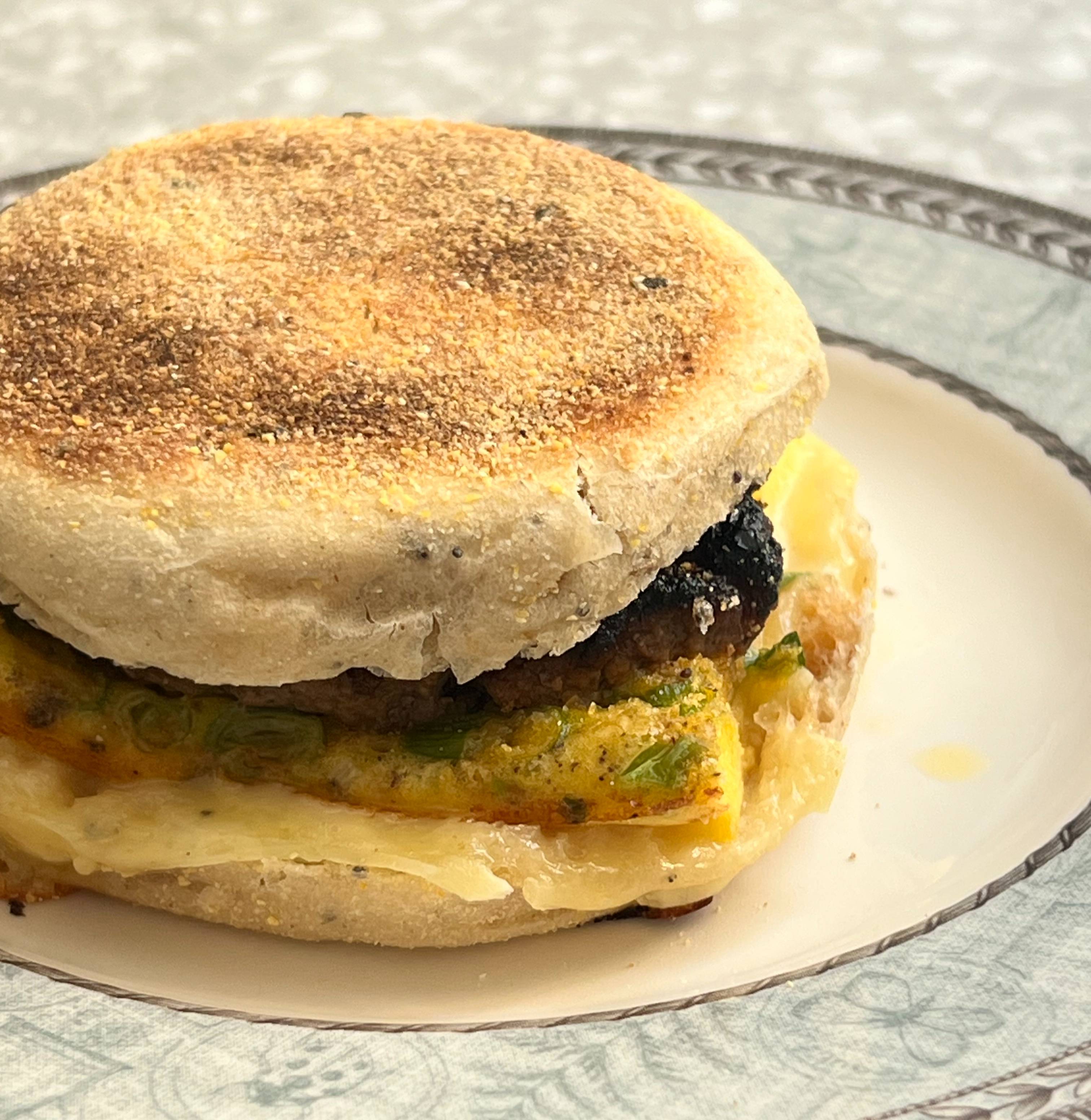
This is a proper, freezer-stash breakfast muffin, make once on a Sunday and then have on hand for the next fortnight. And it happens to be one of the most iron-dense breakfasts I've built in a long time, thanks to an ingredient most people scroll straight past: liver.
I know. Stay with me.
"Liver? I don't think I'm a liver person"
Fair. Most of us aren't, which is exactly why this recipe hides it in plain sight. The chicken liver is finely chopped through 770g of beef mince, so it's a small fraction of the total patty. Blended through and cooked into a well-seasoned burger, it mostly disappears texturally and flavour-wise, while still contributing a serious hit of iron, B12, copper and vitamin A. The exact nutrients iron needs alongside it to actually get used by your body [6][7]. More on that below.
"I genuinely don't have time for a proper breakfast"
That's exactly why this one's built the way it is. Make all ten in one go, wrap them individually, and freeze. Thaw one in the fridge overnight, then straight into the sandwich press for a few minutes in the morning - toasted, melted, done. No decision-making required before 7am, which honestly might be the bigger win.
"Is this safe if I'm expecting?"
Yes, with one tweak. Liver is naturally very high in vitamin A, and most pregnancy guidance suggests limiting large amounts of it. Simply leave the liver out and use beef mince on its own, you'll still get a great iron hit from the beef, eggs and cheese, so it's an easy one to make bump-friendly.
Why this combo actually works
Beef and liver give you haem iron - the form your gut absorbs most efficiently, without needing much help from other nutrients [4]. Iron deficiency is the most common nutrient deficiency in the world, and here in Australia it affects around 1 in 5 women [1][2], so a breakfast that's genuinely doing something about it (rather than just filling a gap until morning tea) is worth having in the freezer.
The liver also happens to bring along vitamin A, B12, copper and folate — the cofactors your body needs to actually build red blood cells and put that iron to use, not just have it sitting in storage [6][7]. That's a whole topic in itself (coming later in this series), but the short version: iron doesn't work alone, and a lot of "I'm eating iron-rich food but still feel wrecked" comes down to those supporting nutrients being overlooked.
Final Thoughts
Persistent fatigue that toast and coffee can't touch is worth actually investigating rather than pushing through, a comprehensive blood panel looks at iron alongside the B vitamins and inflammation markers that affect how you're absorbing and using it, so you're not guessing.
If you've been feeling drained for a while and want to get to the bottom of it properly, book a free 15-minute discovery call and let's talk through what's actually going on.
References
Pasricha, S. R., et al. (2024). Updating the diagnosis and management of iron deficiency in the era of routine ferritin testing of blood donors by Australian Red Cross Lifeblood. Medical Journal of Australia, 221(7).
McLean, E., Cogswell, M., Egli, I., Wojdyla, D., de Benoist, D. (2009). Worldwide prevalence of anaemia. Public Health Nutrition.
Napolitano, M., et al. (2014). Iron-dependent erythropoiesis in women with excessive menstrual blood losses and women with normal menses. Annals of Hematology.
National Heart, Lung, and Blood Institute (NHLBI). (2022). Iron-deficiency anaemia.
Deng, J., et al. (2024). Efficacy of vitamin C with Fe supplementation in patients with iron deficiency anaemia: a systematic review and meta-analysis.
Garcia-Casal, M. N., et al. (1998). Vitamin A and B-carotene can improve nonheme iron absorption from rice, wheat and corn by humans.
Koury, M. J., Ponka, P. (2004). New insights into erythropoiesis: the roles of folate, vitamin B12, and iron.


