
The 3pm Crash and Cravings: What Your Blood Sugar Is Trying to Tell You
You know the moment.
It's about 3pm. You were fine an hour ago, and now you're rummaging through the drawer for that emergency chocolate, eyeing off the tin of biscuits in the office kitchen, or you've put the kettle on for your fourth coffee, because surely that will get you to dinner.
By the time you've eaten it, you feel a bit better. And then, an hour later, oddly worse.
If your afternoons have a predictable slump-and-crave pattern, I have good news: this isn't a lack of discipline, and you haven't "let yourself go." It's your blood sugar talking — and once you understand what it's saying, it becomes genuinely fixable. This is post three in the carbs and fibre series (catch post one on carbs and post two on fibre if you missed them), and it's the one that ties the whole thing together.
So what's actually happening at 3pm?
Let's rewind to lunch.
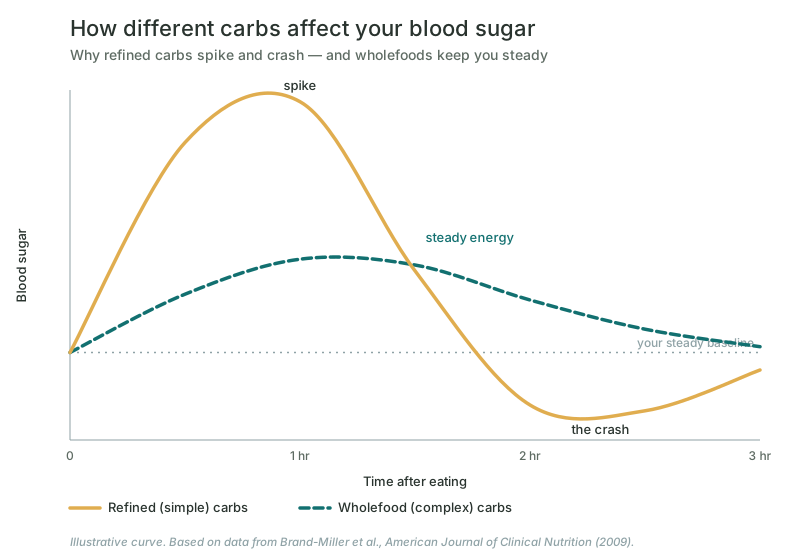
If your lunch was mostly carbohydrate — a sandwich, a wrap, sushi, a quick bowl of pasta — with not much protein or fibre alongside, your blood sugar rose quickly afterwards. That part feels fine; you might even have felt energised.
The trouble comes next. A rapid rise is usually followed by a rapid fall — and often that fall dips below where you started, a bit like a see-saw tipping too far the other way. That dip is the 3pm crash. And here's the fascinating part: research using continuous glucose monitors on over a thousand people found that these post-meal glucose dips — around two to three hours after eating — were a better predictor of hunger than the peak was. The people with the biggest dips felt hungrier, reached for their next meal sooner, and ate around 300 more kilojoules' worth extra across the day.¹
So that desperate 3pm rummage? It's not weakness. It's your body, sitting in a blood sugar trough, doing exactly what it's designed to do: send you looking for quick energy.
"But I'm so good the rest of the day"
I hear this constantly, and I want to gently reframe it.
The 3pm crash was never a measure of your character. You can be the most organised, capable woman in the room and still be at the mercy of a blood sugar dip — because by the time the craving hits, it's a physiological signal, not a choice you're consciously making. Trying to grit your teeth through it is like trying to ignore thirst. You might manage for a while, but your body will keep asking.
The answer isn't more grit. It's changing what happens earlier in the day so the crash never really arrives.
The midlife twist
Here's why this often gets louder in your 40s and beyond.
As I covered in the carbs post, oestrogen helps keep your body sensitive to insulin — the hormone that clears glucose out of your bloodstream. As oestrogen fluctuates and declines through perimenopause, that sensitivity can dip, which means your blood sugar can swing more dramatically than it used to.² The same lunch that carried you comfortably to dinner at 32 might leave you crashing at 45.
It's not in your head, and it's not that you've suddenly become undisciplined. Your body's internal settings have genuinely shifted — so the way you eat gets to shift with them.
Why the usual fixes make it worse
When the crash hits, the instinctive responses tend to deepen the very cycle they're trying to solve:
Another coffee. Caffeine on an empty, crashing system can nudge up your stress hormones and leave you more jittery-then-flat, without addressing the actual problem: no fuel.
A sugar hit. A biscuit or a handful of lollies lifts you fast — and then drops you again just as fast, usually before 5pm, right when you're trying to get dinner sorted. The rollercoaster continues.
Pushing through / skipping. Ignoring hunger and letting yourself get more depleted tends to set up an even bigger crash and a ravenous evening, where you eat everything in sight after the kids are down.
None of these are moral failings. They're just fixes aimed at the wrong moment.
What actually helps
The real fix for a 3pm crash happens hours earlier — and it's wonderfully doable.
Anchor your breakfast with protein and fibre. This is the single biggest lever. A carbohydrate-only breakfast (toast, cereal, a banana on the run) sets up the first spike-and-crash of the day and starts you on the see-saw early. A breakfast built around protein and fibre keeps you steady for hours. It's the foundation everything else sits on.
Never eat your carbs "naked." Pairing carbohydrates with protein, fibre and a little healthy fat slows the whole glucose release right down — flatter rise, gentler fall, no dramatic dip. So it's the toast with eggs, the fruit with yoghurt and nuts, the crackers with cheese and tomato.
Let fibre do its quiet work. Soluble fibre — the kind in oats, legumes and apples I covered in the fibre post — forms a gel that literally slows how fast glucose enters your bloodstream. More steadiness, fewer troughs.

Don't leave huge gaps between meals. Going too long without eating primes you for a bigger crash and less rational choices later. Regular, balanced meals keep the whole system on an even keel.
Build a snack that actually works. If you know 3pm is your witching hour, meet it with something that combines protein and fibre — a handful of nuts with an apple, yoghurt with seeds, chia pudding, veg sticks with hummus — rather than a lone sweet thing. You'll notice the difference by dinner.
Move after you eat. Even a ten-minute walk after a meal helps your muscles take up glucose more smoothly, softening the peaks and dips. A gentle after-lunch stroll is one of the most effective 3pm-crash preventers there is.
The bottom line
Your 3pm cravings aren't a character flaw or a sign you need more self-control. They're a message — your blood sugar has dipped, and your body is asking for support in the only way it knows how. Answer that message earlier in the day, with steady, balanced meals, and the crash quietly loses its grip.
Not more discipline. A better rhythm. Your body isn't working against you — it's asking you to work with it.
Coming up next in this series: we go deeper. Into your gut, your microbiome, and the surprising two-way conversation between fibre, your gut bacteria and your hormones. It's the piece that ties midlife nutrition together, and it's my favourite one to talk about.
A little help to get your mornings working for you
Since breakfast is the biggest lever on those afternoon crashes, it's the perfect place to start. My free guide, Start Strong: Protein-First Mornings for Women in Midlife, walks you through building a breakfast that keeps you steady all day — with a plate guide and easy recipes, including plant-based options.
Ready to get off the blood sugar rollercoaster for good?
If your energy has been running the show, the crashes, the cravings, the 4pm coffee you don't really want and you'd love to feel steady again, that's exactly the kind of thing I help women untangle.
Book a free 15-minute discovery call and let's work out what's really going on for you.
References
Wyatt P, Berry SE, Poole R, et al. Postprandial glycaemic dips predict appetite and energy intake in healthy individuals. Nature Metabolism. 2021;3:523–529. doi:10.1038/s42255-021-00383-x
Estrogen and Metabolism: Navigating Hormonal Transitions from Perimenopause to Postmenopause. PMC (National Library of Medicine); 2025. Available at: pmc.ncbi.nlm.nih.gov/articles/PMC12431702
healthdirect Australia. Carbohydrates and the glycaemic index. Available at: healthdirect.gov.au/carbohydrates
National Health and Medical Research Council (NHMRC) / Eat For Health. Carbohydrates, dietary fibre and the glycaemic index. Available at: eatforhealth.gov.au
This article is general information only and isn't a substitute for personalised advice. If persistent energy crashes, cravings or low energy are affecting your daily life, that's worth looking into properly — book in and we'll get to the root of it together.


