
Why Am I So Bloated? The Truth About Fibre in Midlife
Let me guess. You eat well - better than most, probably. You've got the leafy greens, the wholegrain toast, the odd handful of nuts. And yet by mid-afternoon your waistband is having a quiet word with you, and by evening you look like you've swallowed a balloon.
Does it sound like I'm in your head right now?
Bloating is one of the most common things women mention to me in clinic — and one of the most frustrating, because it so often shows up despite eating what you think are all the right things. So in this second post of the carbs and fibre series (you can catch the first one on carbs here if you missed it), I want to talk about the nutrient sitting right at the centre of this: fibre.
It's the unglamorous hero of gut health, most of us aren't getting enough, and - plot twist - it can be both the cause of your bloating and the fix. Let me explain.
First, what actually is fibre?
Fibre is a type of carbohydrate — but a special one. Your small intestine can't break it down and absorb it the way it does other carbs, and that's precisely what makes it so valuable.¹ Instead of being digested for energy, it travels on to your large intestine, where it does some of its most important work.
There are three types worth knowing:
Soluble fibre dissolves in water and forms a soft gel in your gut. This is the type that slows digestion down, helps steady your blood sugar, and lowers cholesterol.¹˒² You'll find it in oats, legumes, apples, citrus, and psyllium.
Insoluble fibre doesn't dissolve — it adds bulk and helps everything move through smoothly, keeping you regular.¹ Think whole-grains, nuts, seeds, and the skins of fruit and veg.
Resistant starch, a bit of a hidden gem, feeds your beneficial gut bacteria and helps keep the lining of your bowel healthy.¹˒² It's in cooked-and-cooled potato or rice, slightly underripe bananas, and legumes
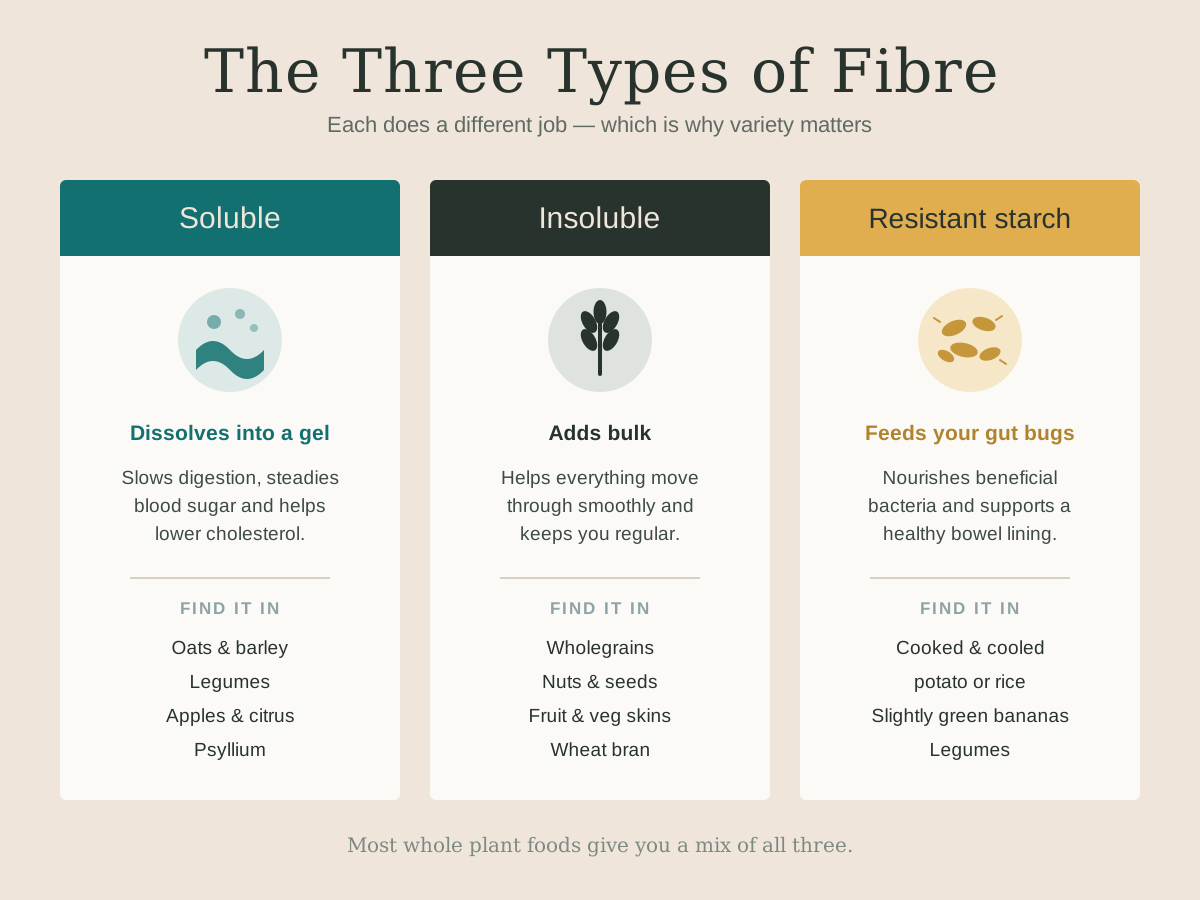
Most whole plant foods give you a mix of all three — which is exactly why variety matters so much..
"So why am I so bloated, then?"
Here's the frustrating paradox at the heart of fibre and bloating.
Too little fibre leaves your digestion sluggish. Things slow down, you become less regular, and that backlog is a very common source of bloating and discomfort. So if your diet is light on plants and heavy on refined, processed foods, low fibre may well be part of the picture.
But increasing fibre too quickly can also cause bloating and wind - because your gut bacteria essentially throw a party with all the new material and produce more gas while they adjust. This is the bit almost nobody warns you about: people hear "eat more fibre," go from 15g to 40g overnight, feel dreadful, and conclude fibre is the enemy. It isn't. The pace was just too fast.
And then there's midlife. As hormones shift through perimenopause, many women notice their digestion becomes more temperamental — more bloating, more irregularity, foods that never used to bother them suddenly making their presence felt. Your gut and your hormones are far more connected than most people realise, which is a thread I'll pull on properly later in this series.
The takeaway: bloating usually isn't a sign you should eat less fibre. More often, it's a sign to be more thoughtful about the type, the amount, and crucially, the pace.
(One important note: ongoing bloating is exactly the kind of thing worth exploring properly — there's almost always a workable root cause once you start digging, and that's the sort of thing I help women untangle. The one clear exception is blood in your stool, which always warrants prompt medical attention. Otherwise, persistent bloating is a "let's get to the bottom of this together" situation, not a "grin and bear it" one. And if you've tried "all the gut advice" and feel worse, it's worth knowing that standard gut advice doesn't suit everyone — sometimes it's simply the wrong advice for your particular gut.)
How much fibre do you actually need?
You'll see 25g a day quoted for women almost everywhere (30g for men).²˒³ And that figure isn't wrong, but it's worth understanding what it actually represents.
Like the protein recommendations I've written about before, this is a population-level guideline. It's the amount considered adequate to keep most people well, not the amount that has your digestion, blood sugar and gut bacteria genuinely thriving. These are two different questions.
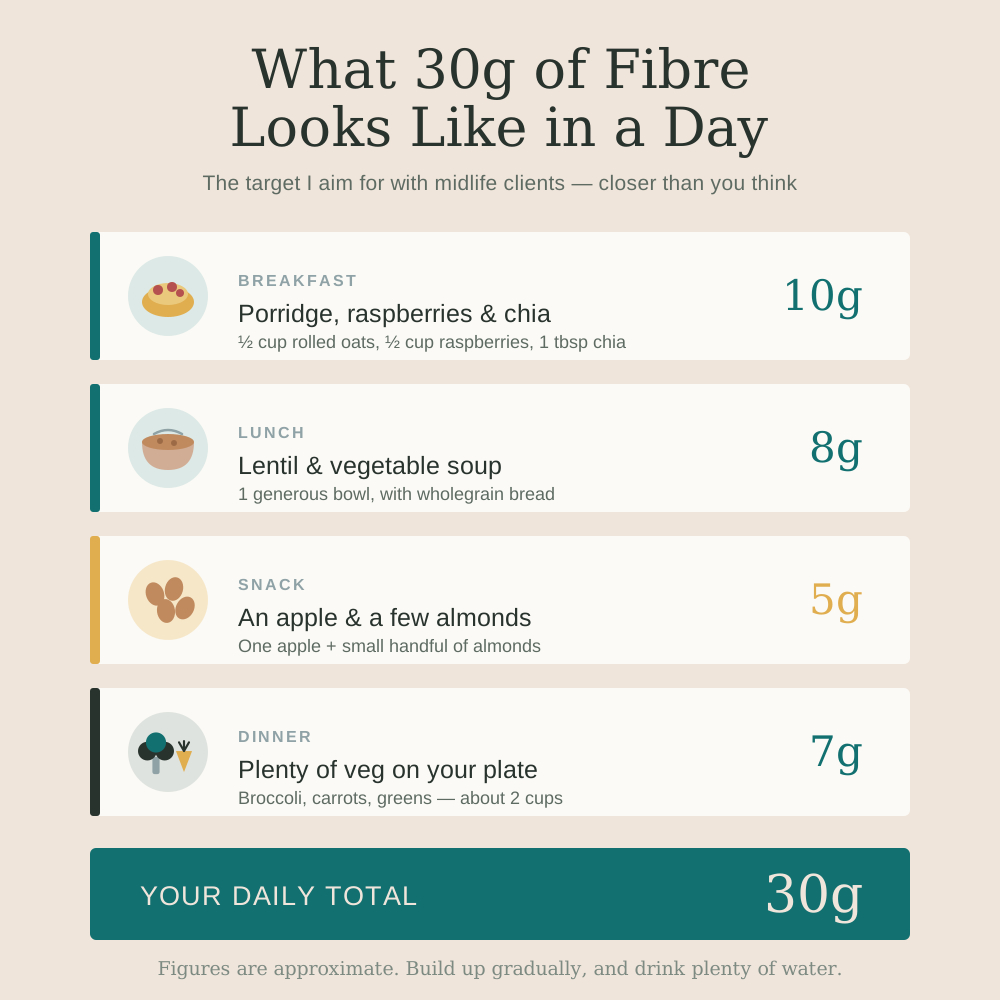
In clinic, I'm generally aiming for at least 30g a day with the women I work with and often a little more, depending on what's going on for them. That's where I tend to see the real shifts: steadier energy, more comfortable digestion, fewer cravings.
Now for the sobering bit. Most Australian women are hovering closer to 20g, and only around a quarter of adults are even hitting the 25g mark.² So for a lot of us, we're not talking about a small top-up — we're talking about closing a genuine gap.
The good news? Closing it doesn't require overhauling your whole life. It's genuinely a handful of small swaps, which we'll get to.
Why fibre matters even more in midlife
If there's a moment to take fibre seriously, it's now. Here's why it earns its keep at this stage of life:
Your digestion naturally slows with age. The gut becomes a little less efficient over time, which makes adequate fibre more important, not less, for keeping things comfortable and regular.⁴
It steadies your blood sugar. Soluble fibre slows the release of glucose into your bloodstream — which, as I covered in the carbs post, is exactly what helps flatten the spikes and crashes that drive those relentless afternoon cravings.² Fibre and blood sugar are a team.
It keeps you satisfied. Fibre-rich foods are more filling and slow digestion, so you feel comfortably full for longer — which quietly supports a healthy weight without a single thought about eating less.²˒⁵
It feeds your gut — and your gut does a lot. Your gut bacteria ferment certain fibres into short-chain fatty acids, which help keep your bowel lining healthy and support a calm, well-regulated system far beyond digestion.⁴ Given how much of your immune function and hormone processing runs through the gut, this matters more in midlife than at any point before.
It's genuinely protective long-term. A good fibre intake is linked with lower risks of heart disease, type 2 diabetes, and bowel and breast cancers.⁴ This is foundational, nourishing, look-after-your-future-self stuff.
Signs you might be running low
You won't get a formal diagnosis of "not enough fibre," but your body tends to hint at it:
Irregular or uncomfortable bowel movements
Bloating and sluggish digestion
Feeling hungry again soon after meals, or grazing constantly
Energy that dips and spikes across the day
Rising cholesterol at your check-ups
None of these are only about fibre — but if several ring true and your plate is light on plants, it's a good place to start.
Reading this and nodding along? If your gut has felt like a daily guessing game, you don't have to keep working it out alone. Helping women get to the root of exactly this is what I do — and a free 15-minute call is a lovely, no-pressure place to start. Book yours here whenever you're ready.
How to get more fibre — without the bloat
This is the part that actually matters, and it's refreshingly simple. The golden rule: go gradually.
Build up slowly. Add a little more every few days rather than all at once, so your gut has time to adjust. This single tip prevents most of the bloating people blame on fibre.
Drink more water. Fibre needs water to do its job — especially the insoluble kind. Up your fibre without upping your fluids and you can actually feel more clogged up, not less.
Aim for variety, not just quantity. Because the three types do different jobs, a range of plants beats loading up on one. A rough rule: something from each of vegetables, fruit, whole-grains, and legumes across your day.
Keep the skins on. Leaving the skin on your fruit and veg (well washed) is one of the laziest, easiest ways to boost insoluble fibre.
Lean on legumes. Lentils, chickpeas, and beans are fibre powerhouses — stir them through soups, salads, and pasta sauces.
Try resistant starch. Cooked-and-cooled potato or rice (hello, leftovers) and slightly green bananas are simple ways to feed your good gut bugs.
If you want a gentle, structured place to begin, I've written about simple ways to support your gut that pair perfectly with slowly lifting your fibre.

The bottom line
Fibre isn't glamorous, and it's never going to trend the way protein has. But it's one of the most quietly powerful things on your plate — for your digestion, your blood sugar, your hormones, and your long-term health. And if you've been battling bloating, the answer usually isn't less fibre. It's the right fibre, in the right amount, introduced at the right pace.
Your body isn't broken. It's just asking for support — and a little more fibre, added gently, is often exactly the support it's been after.
Coming up next in this series: the 3pm slump, the cravings you can't reason your way out of, and how fibre and carbs work together to keep your blood sugar — and your energy — steady all day.
Want some support getting your gut on side?
If your digestion has felt like a daily guessing game and you'd love someone to help you make sense of it, that's exactly what I do.
Book a free 15-minute discovery call and let's work out where to start — gently, and in a way that actually fits your life.
✨ Book your free 15-minute call and let’s take the first step.
FAQ
Can too much fibre cause bloating?
Yes — particularly if you increase it quickly. Your gut bacteria need time to adjust to the extra material, and in the meantime they produce more gas. This is why building up gradually over a few weeks, rather than overnight, makes such a difference to how you feel.
How long does it take to notice the benefits of eating more fibre?
Many women notice their digestion becoming more regular within one to two weeks. Any initial wind or bloating from increasing fibre usually settles within a few weeks as your gut bacteria adapt. The longer-term benefits — for blood sugar, cholesterol and gut health — build steadily over months.
Should I take a fibre supplement instead?
Supplements like psyllium can be genuinely useful in some situations, but they're not a like-for-like swap. Whole foods give you a mix of fibre types plus vitamins, minerals and antioxidants that a single supplement can't replicate. Food first, supplements where there's a specific reason.
Does cooking vegetables reduce their fibre?
No — cooking doesn't destroy fibre. It softens it, which some people actually find easier to tolerate. Cooking and then cooling starchy foods like potatoes or rice even increases their resistant starch, which is excellent food for your gut bacteria.
What's the easiest way to add more fibre without much effort?
Leave the skins on your fruit and vegetables, add a tin of lentils or chickpeas to soups and sauces, swap white bread and rice for wholegrain versions, and keep a jar of mixed seeds to scatter over whatever you're eating. Small, repeatable changes add up quickly — just remember to drink more water alongside.
References
healthdirect Australia. High-fibre foods and diet. Available at: healthdirect.gov.au/high-fibre-foods-and-diet
Dietitians Australia. Fibres for your gut: sorting through the roughage. Available at: dietitiansaustralia.org.au
National Health and Medical Research Council (NHMRC) / Eat For Health. Nutrient Reference Values: Dietary fibre. Available at: eatforhealth.gov.au
Better Health Channel (Victoria). Dietary fibre. Available at: betterhealth.vic.gov.au
Clark MJ, Slavin JL, et al. The effect of fibre on satiety and food intake: a systematic review. Reviewed evidence on soluble dietary fibre, satiety and energy intake. Available via PubMed Central: ncbi.nlm.nih.gov/pmc/articles/PMC6352252
This article is general information only and isn't a substitute for personalised advice. If bloating or digestive symptoms are affecting your daily life, that's worth looking into properly — book in and we'll work through it together. The one exception is blood in your stool, which always warrants prompt medical attention.


