
Are Carbs Really the Enemy? The Truth About Carbohydrates in Midlife
If there's one food group that's been put on trial, found guilty, and sentenced without much of a defence, it's carbohydrates. Bread is the enemy. Pasta is "naughty." Fruit apparently has "too much sugar’ - I fell victim to that for a while!
Somewhere along the way, a perfectly good potato became something to fear.
I get it. You've probably tried cutting carbs at some point - most women I work with have. And maybe it worked for a little while, until it didn't, and you found yourself exhausted, snappy, and dreaming about toast.
So let me say this clearly, right at the top: carbs are not out to get you.
What is true is that your relationship with carbohydrates can shift in midlife and understanding why is far more useful than fearing them. So let's clear the air.
First, what even is a carbohydrate?
Before we decide whether something is "good" or "bad," it helps to know what we're actually talking about.
Carbohydrates are one of three macronutrients (alongside protein and fat), and in your body they're broken down into glucose, they’re actually your brain and muscles' preferred source of fuel (1). In fact, your brain is a bit of an energy diva: it runs almost entirely on glucose, which is partly why a low-carb day can leave you foggy, irritable, and reaching for the coffee.
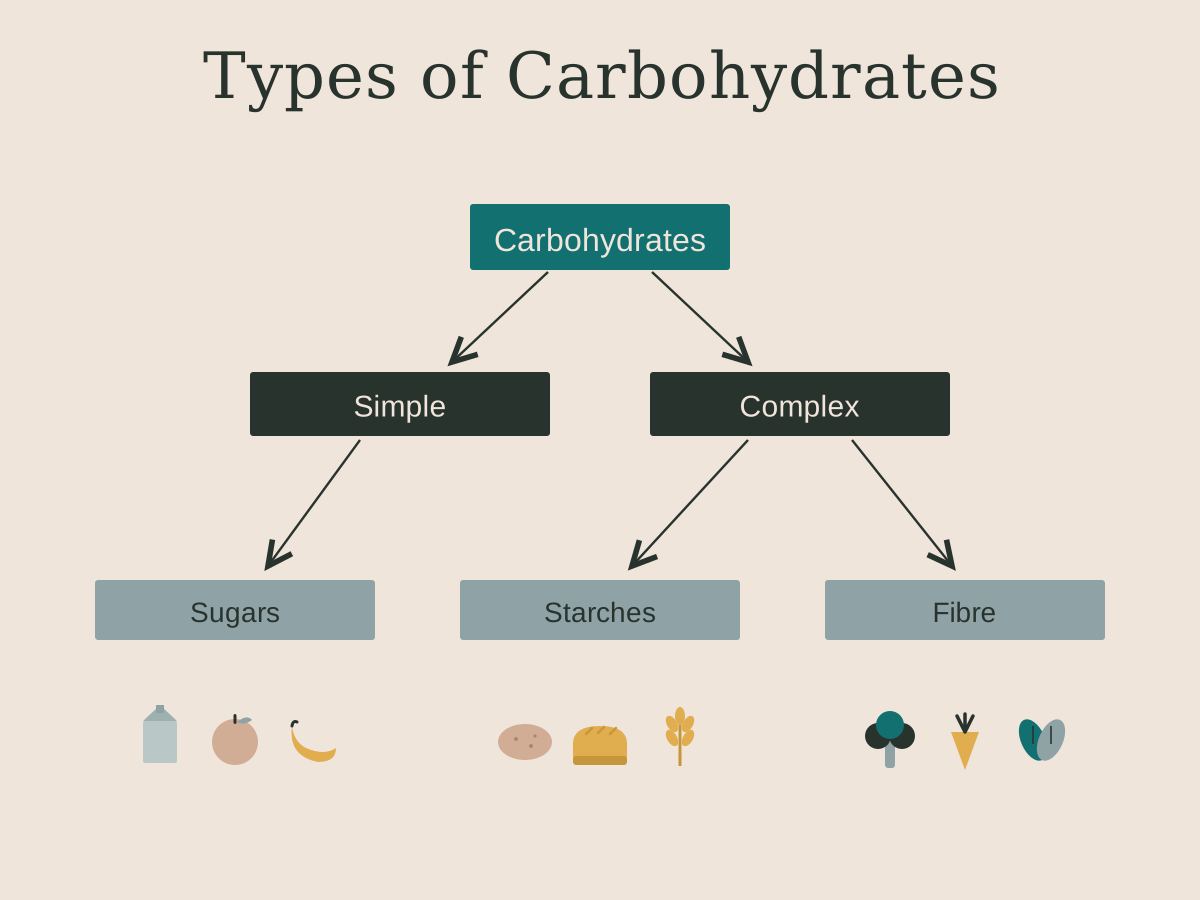
Carbohydrates come in three forms (1):
Sugars — the simplest form, found naturally in fruit (fructose) and milk (lactose), and added to processed foods.
Starches — found in things like potatoes, grains, and legumes.
Fibre — the part your body can't break down, which feeds your gut bacteria and keeps everything moving. (Fibre deserves its own spotlight — and it's getting one next in this series.)
So when someone says "carbs are bad," they're lumping a sugary fizzy drink in with a bowl of lentils and an apple. Those are not the same thing, and your body knows it.
"But I gain weight the moment I look at bread"
Here's where midlife genuinely changes the picture and where I want you to feel informed, not alarmed.
During perimenopause, oestrogen begins to fluctuate and gradually decline once you’re closer to menopause. And oestrogen does far more than most people realise. One of its quieter jobs is helping your body stay sensitive to insulin, the hormone that pulls glucose out of your bloodstream and into your cells to be used for energy (2).
As oestrogen dips, your cells can become a little less responsive to insulin (2, 3). The practical translation: the same slice of toast that didn't bother you at 25 might now leave you with a sharper blood sugar spike, a faster crash, and that lovely 3pm slump where biscuits start whispering your name. And if that afternoon crash has become a daily event, it's worth knowing your fatigue isn't always 'just' tiredness.
This is also part of why weight can settle more around the middle in midlife, a shift that affects the majority of women through the menopausal transition (2). It's not a personal failing, and it's certainly not a sign your body is broken. Your body isn't broken. It's just it’s way of letting you know it needs a little support & a different approach - and there's plenty you can do to support your body through these hormonal changes.
So the issue was never carbs as a whole. It's which carbs, and how you're eating them.
It's not carbs vs no carbs - it's about quality
I'm not a fan of branding foods "good" or "bad" — that thinking tends to send people in circles. But there's a meaningful difference between carbohydrates that work with your body and ones that ask a lot of it.
The ones to lean into are whole and minimally processed: vegetables, fruit, legumes, whole-grains, oats. They come packaged with fibre, vitamins, and minerals, and they release their glucose slowly and steadily (4). Simply put, the healthier choices are foods that are minimally processed, high in fibre, and lower on the glycaemic index.
The ones to be a bit more thoughtful about are the highly refined ones - white bread, sugary cereals, pastries, lollies, fruit juice and soft drinks. They've had most of their fibre and nutrients stripped out, so they hit your bloodstream fast, spike your blood sugar, and drop you just as quickly (1, 4). On their own, and often, that rollercoaster is hard on an already-sensitive system.
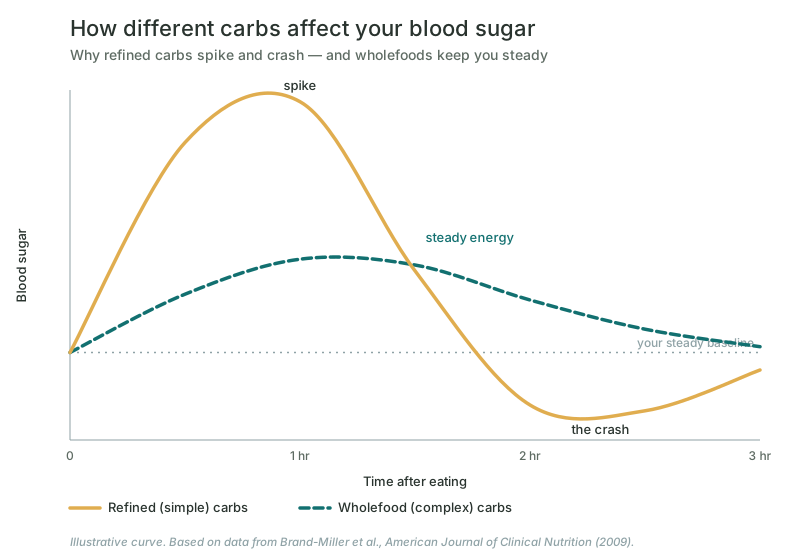
And here's the thing most "carbs are evil" messaging conveniently skips: on average, Australians get a hefty share of their daily energy from carbohydrates. But far too much of it comes from refined, low-fibre sources rather than the nourishing whole-foods our bodies actually thrive on (5). The problem isn't the carbs. It's the kind.
Why cutting out carbs tends to backfire
When you're feeling stuck, cutting an entire food group can seem like decisive action. But here's what I see happen, again and again.
Your energy tanks. Glucose is your body's go-to fuel. Pull it out and you can feel flat, foggy, and short-fused — not exactly the version of yourself you were hoping for.
Your training suffers. If you're strength training in your 40s and 50s (and I really hope you are, it's one of the best things you can do for your muscle and bones), your muscles rely on stored carbohydrate, called glycogen, to actually work and recover. Run those stores low and everything feels harder.
Your sleep and mood can wobble. Carbohydrate plays a role in how your body winds down in the evening. Strip it out entirely and some women find sleep gets worse, not better.
Your cycle can pay the price. For women still menstruating - and that includes plenty of us well into perimenopause - carbohydrates do something you might not expect: they help tell your body it's safe. Your reproductive system is finely tuned to how much energy is coming in. Consistently eat too little, or drop your carbs too low, and your body reads it as a sign that times are lean and reproduction becomes a luxury it decides it can't afford. On a practical level, low energy and low carbohydrate availability can interrupt the steady pulsing of the hormones that run your cycle, dialling down oestrogen and leading to periods that become irregular, lighter, or disappear altogether (6). You need a certain baseline of carbohydrate for your hormones to tick along — and for your body to trust that it's safe enough to create life. This is your body being clever, not broken. But those flow-on effects — to your mood, energy, bones, and fertility if that's relevant for you — simply aren't a price worth paying.
And it's just not sustainable. Any approach that has you white-knuckling through family dinners and saying no to half the menu isn't going to last — and when it ends, you're back where you started, often feeling worse for the round trip. This is the diet-go-round, and you've likely been on it before.
You don't need another diet. You need a better approach.
So what actually helps?
This is the good bit — because it's genuinely simpler than the internet would have you believe.
Pair your carbs. A carbohydrate eaten on its own spikes faster than one eaten alongside protein (I deep dive midlife protein here), fibre, and healthy fat. So rather than toast alone, it's eggs with your toast. Rather than fruit alone, it's fruit with yoghurt and a few nuts. The protein and fibre slow everything down and keep your energy far steadier (4).
Favour whole over refined, most of the time. Wholegrain over white. Real fruit over juice. A pile of vegetables at every meal you can manage. You're not aiming for an A+ on every plate, you're aiming for better, more often.
Don't skip meals to "save" carbs. Under-eating and meal-skipping tend to make blood sugar swings and cravings worse, not better. Regular, balanced meals are the foundation here.
Move after you eat. A gentle 10-minute walk after a meal helps your muscles soak up glucose with less effort from your insulin. It's one of the simplest, most effective habits there is and a lovely excuse to step outside.
Time your bigger carb servings around movement. Here's a simple, slightly under-used trick: your body handles carbohydrates best when it actually needs them — and it needs them most around exercise. After a good walk, a strength session, or any solid movement, your muscles are primed to soak up glucose and restock their fuel stores (glycogen) with far less demand on your insulin (7). So if there's a meal to lean a little more carb-forward — the porridge, the rice, the sweet potato — the window around training is the one. This matters even more in midlife: as muscle gets harder to hold onto and insulin sensitivity shifts, placing your carbs where your body is most ready to use them supports your energy, your recovery, and your training all at once. It's not about earning your carbs, it's about putting them where they work hardest for you.
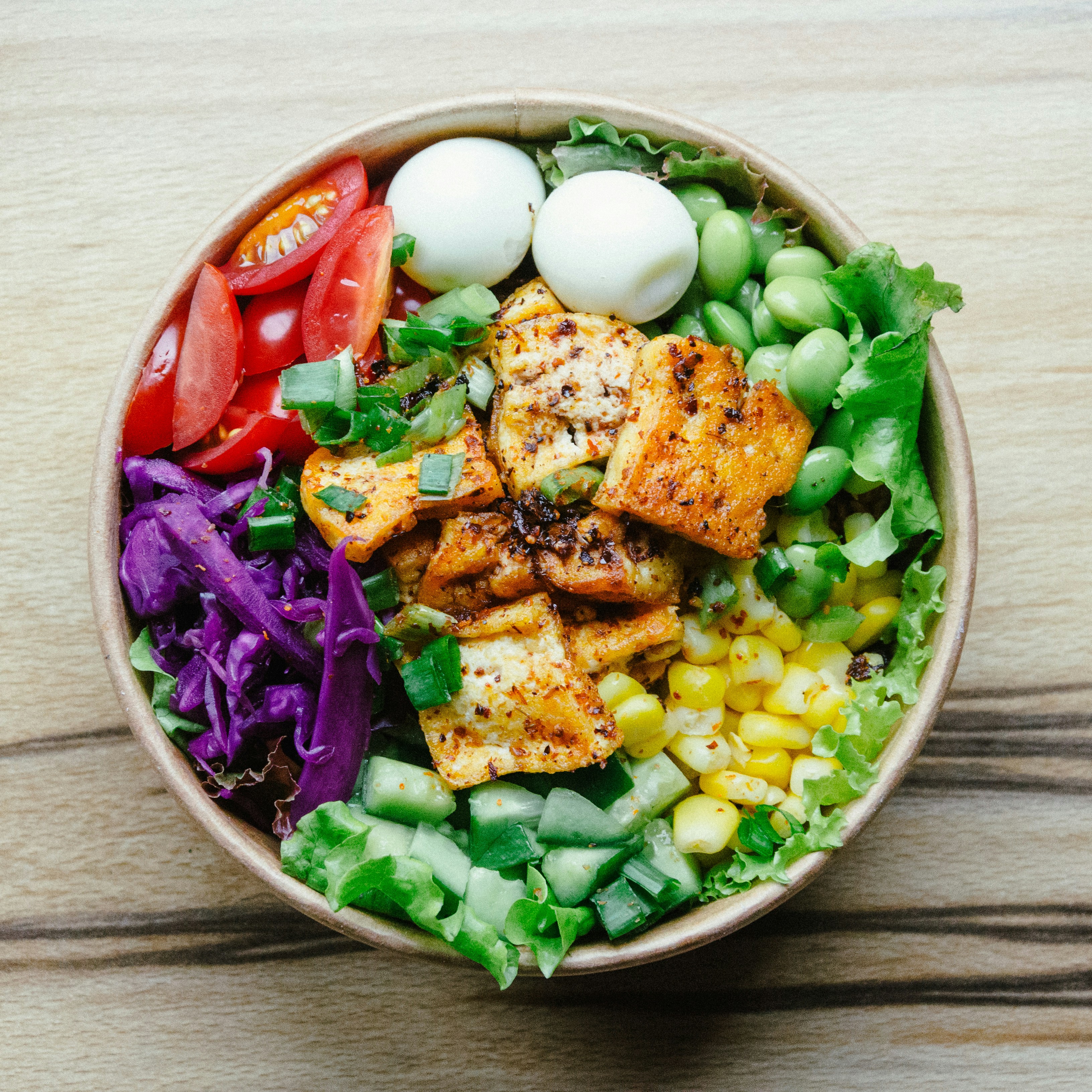
None of this is about being perfect. It's about small, sustainable shifts that bring your energy and blood sugar back into balance. Small changes, big impact.
The takeaway?
Carbohydrates aren't the villain of your midlife story. The fear of them probably caused more stress than the foods ever did. What's changed is that your body now appreciates a little more intention — better-quality carbs, eaten alongside protein and fibre, in regular balanced meals.
That's not a punishment. That's just working with your body instead of against it.
Coming up next in this series: the nutrient I think deserves top billing in midlife, fibre! Why it matters more than ever right now, what it's quietly doing for your hormones and gut, and why most of us aren't getting nearly enough.
Want some support putting this into practice?
If you've read all this and thought I understand the theory, but I have no idea what this looks like on my actual plate, that's exactly what I'm here for.
Book a free 15-minute discovery call and let's work out what balanced, blood-sugar-friendly eating looks like for your life, not someone else's.
And if you'd like my articles landing gently in your inbox, you can sign up to my newsletter here.
Frequently asked questions
How many carbs should a woman in midlife eat each day?
There's no single number that suits everyone — it depends on your body, your activity levels, and what else is going on with your health. Rather than counting, most women do far better focusing on quality and pairing: whole-food carbohydrates at each meal, alongside protein and fibre. That approach steadies blood sugar without any tallying.
Are carbs at night bad for you?
No. Your body doesn't have a cut-off after which carbohydrates behave differently. In fact, some women find an evening serve of whole-food carbohydrate helps them wind down and sleep more soundly. What matters far more than timing is the overall quality of what you're eating across the day.
Is fruit too high in sugar?
Whole fruit comes packaged with fibre, water, vitamins and antioxidants, all of which slow the release of its natural sugars. That's very different from the sugar in a soft drink or a pastry. Fruit juice is where it shifts — with the fibre stripped out, it hits your bloodstream much faster than the whole fruit would.
Will cutting carbs help me lose weight in perimenopause?
It may shift the scales briefly, but it tends to backfire — energy drops, sleep suffers, workouts get harder, and it rarely lasts. Most women in midlife see better, more sustainable results from improving carbohydrate quality and pairing carbs with protein and fibre, rather than removing them.
What are the best carbohydrates to eat?
Whole and minimally processed ones: vegetables, fruit, legumes, wholegrains, oats and starchy vegetables like sweet potato. They come with fibre and nutrients built in, so they release their energy slowly and keep you steadier for longer.
References
healthdirect Australia. Carbohydrates – types, digestion and glycaemic index. (healthdirect.gov.au/carbohydrates)
Estrogen and Metabolism: Navigating Hormonal Transitions from Perimenopause to Postmenopause. PMC (National Library of Medicine); 2025. (pmc.ncbi.nlm.nih.gov/articles/PMC12431702)
Yan H, Yang W, Zhou F, et al. Estrogen Improves Insulin Sensitivity and Suppresses Gluconeogenesis via the Transcription Factor Foxo1. Diabetes. 2019;68(2):291–304. doi:10.2337/db18-0638
National Health and Medical Research Council (NHMRC) / Eat For Health. Carbohydrates, dietary fibre and the glycaemic index (eatforhealth.gov.au)
HCF (citing Dr Alan Barclay, consultant dietitian, University of Sydney). The truth about carbs and your health (hcf.com.au)
Loucks AB, Thuma JR. Luteinizing hormone pulsatility is disrupted at a threshold of energy availability in regularly menstruating women. Journal of Clinical Endocrinology & Metabolism. 2003;88(1):297–311. doi:10.1210/jc.2002-020369
Kerksick CM, Arent S, Schoenfeld BJ, et al. International Society of Sports Nutrition position stand: nutrient timing. Journal of the International Society of Sports Nutrition. 2017;14:33. doi:10.1186/s12970-017-0189-4


